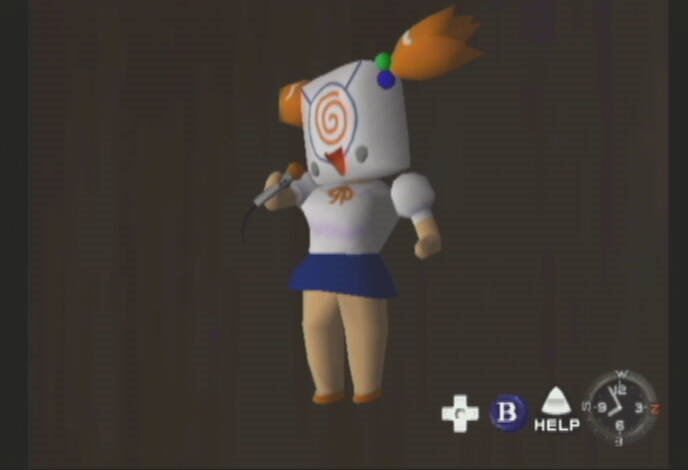
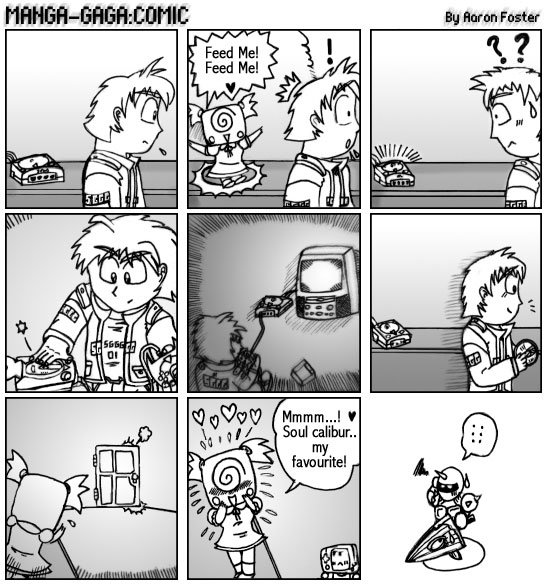
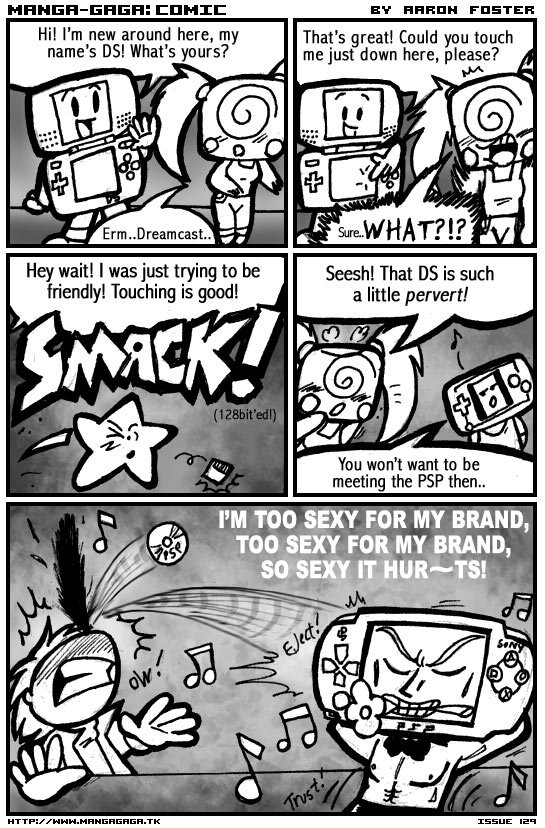
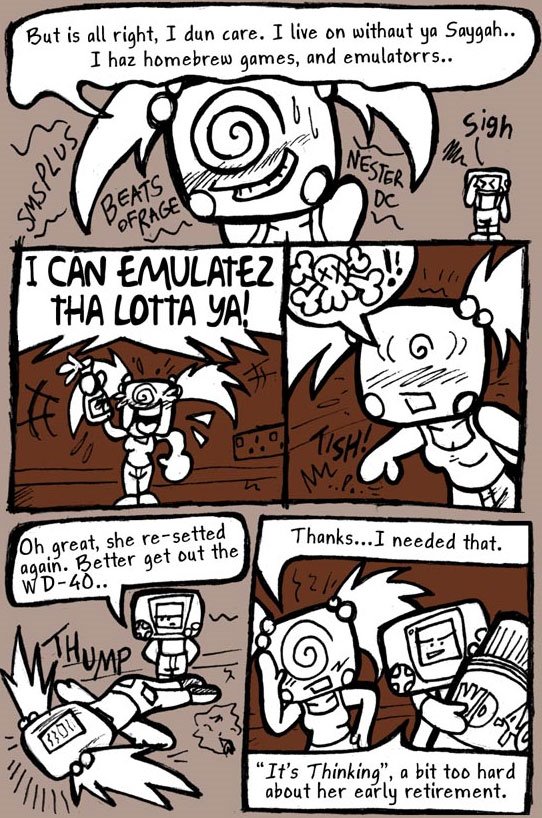
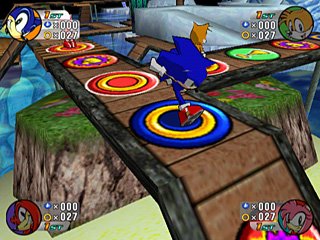
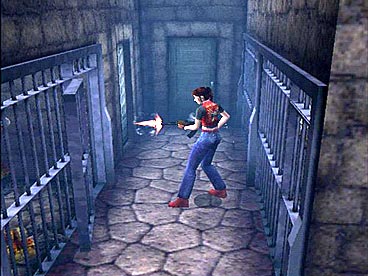
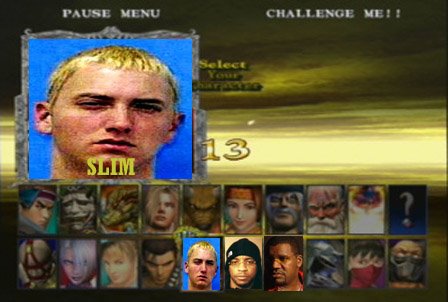
 Well, Shizzle my Nizzle and call me Christmas. I was round at one of my dawgs' (mates) cribs (houses), chillin' (relaxing) and bussin' some choons (listening to music) when the Dreamcast reared it's beautiful, Kaley Cuoco-style head once again. Ubiquitous? You betcha.
The breath-halting moment occured when aforementioned dawg (peace an respec', Big J) loaded into the wireless, the CD 'Off the Wall' by a trendy youth artiste by the name of Eminem. When track 7, Hellbound (feat. J-Black and Masta Ace no less), rolled around, I noticed that it sounded somewhat familiar. Especially since the background music is ripped straight from none other than SOUL CALIBUR!
It gets better -
The first lyrics are "Welcome back to the Stage of History..."!! I shit you not, fellow Dreamcast owning, Soul Calibur playing intelligensia. And for the benefit of you enlightened gamers who have found your way to The 'Yard, click here for the full lyrics - there's even a mention of super camp Elvis impersonator Maxi in there.
And Kudos must go to the gentleman who coined this posts' title (out of ignorance I might add):
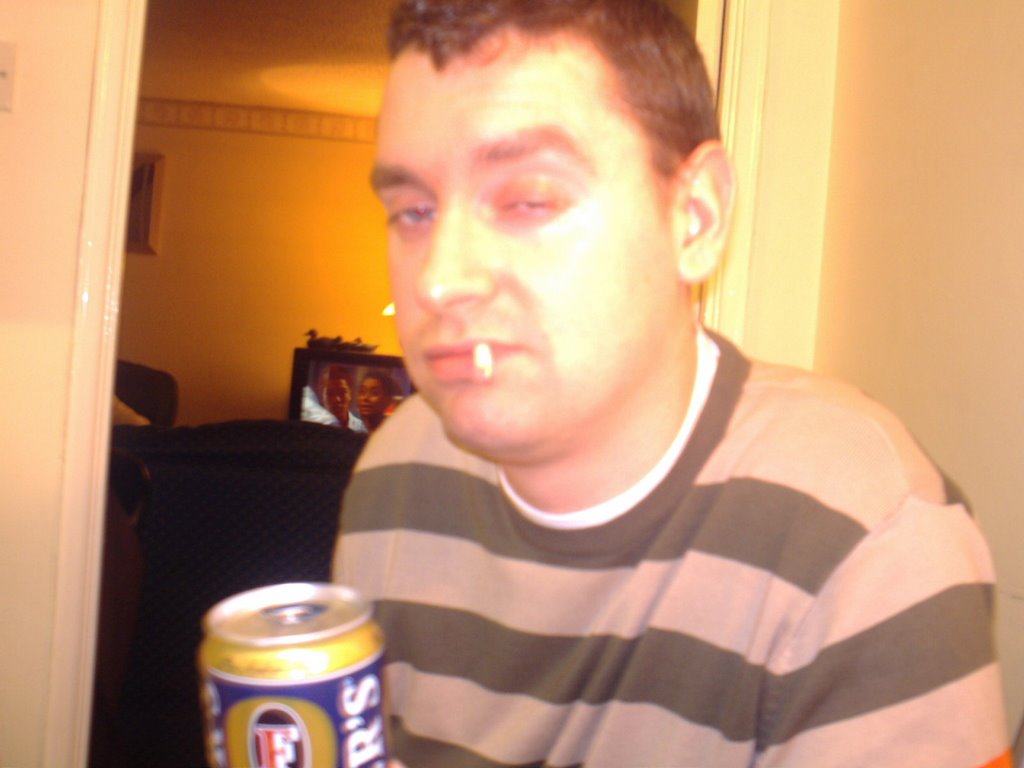 Mr Nickolas P. Charmuck Esq.
He's been waiting for ages to get his mention on the 'Yard - even though he thinks a Dreamcast is something Native Americans use to influence your sleeping patterns. Or something.
 And while I'm doing shout-outs (not a regular feature, but I just been chatting with Pete Doherty so for some reason feel really loved up), please visit www.petercooper.co.uk, the website of a new member of the Order of the Dreamcast and thoroughly nice linker type person.
Right I'm off to watch Red Eye. Which is a bit of a coincidence looking at that picture...